1. Fixture Clamp and Ejector Sequencing
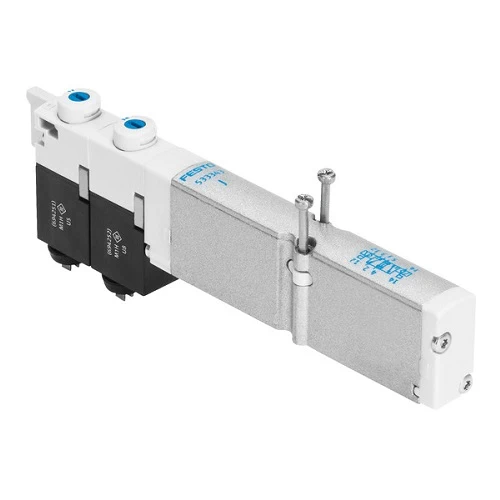
An assembly fixture uses separate single-acting clamp and ejector circuits at different points in its cycle. The dual normally closed 3/2-way functions provide two pneumatic switching paths in one 10 mm body, with pneumatic spring reset. The 230 l/min nominal flow, 3–10 bar working range and separate 3–8 bar pilot pressure provide the selected valve data for the station.
Problem Solved
Two monostable switching functions consolidate the clamp and ejector commands in one valve, supporting separate fixture steps with documented working and pilot pressure conditions.
2 × 3/2 normally closed
Pneumatic spring reset
10 mm
2. Electrical Commands to Two Pneumatic Pilot Branches
A machine uses two downstream pneumatic control elements and needs separate electrically commanded pilot branches. This valve provides two normally closed monostable functions under 24 V DC actuation, with non-reversible working flow. Its 10 ms on and 20 ms off component times characterize the command stage, while the supplied pilot-air pressure must remain within the separate 3–8 bar range.
Problem Solved
Two electrical-to-pneumatic switching paths provide individual commands for downstream control elements, consolidating their pilot-branch routing at one compact MPA valve position.
Two NC functions
24 V DC
10 ms on / 20 ms off
3. Valve-Station Commissioning
During assembly of a pneumatic valve station, technicians need to exercise routing states and correlate electrical commands with the installed valve. The detenting and non-detenting manual override provides local actuation, while signal indication makes the commanded condition visible. The 10 mm valve uses through-hole mounting with a specified 0.25 Nm maximum valve-mounting torque for installation.
Problem Solved
Manual actuation and visible signal indication support local routing checks during commissioning, helping technicians relate the electrical command to the selected pneumatic path at the valve station.
Manual override
Signal indication
10 mm