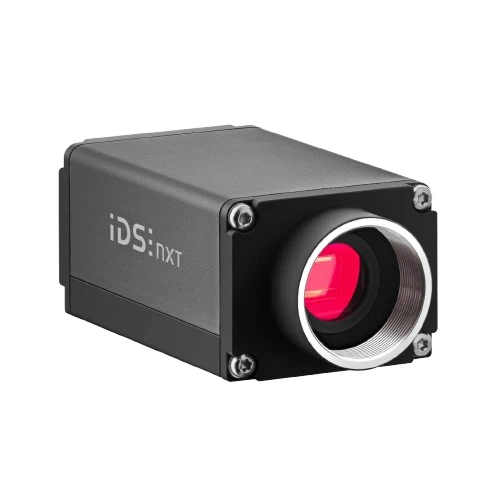
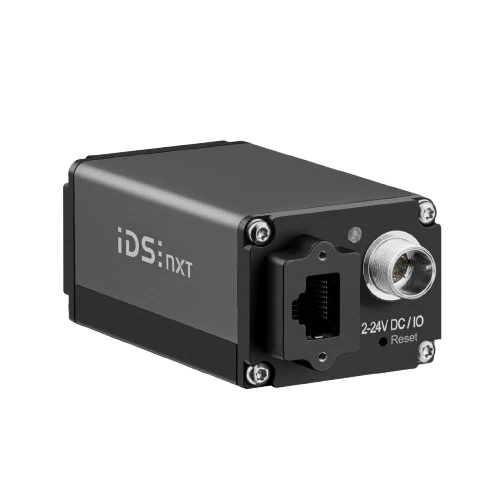
IDS 1010519 NXT malibu RS18083C-HQ 8.29 MP AI Camera

Run on-camera AI with the IDS 1010519 NXT malibu: 3840 × 2160-pixel color imaging, Ambarella processing, RTSP/HTTP video, C-mount and PoE+.

SKU: IDS-1010519 Category:
IDS NXT Cameras

IDS NXT malibu RS18083C-HQ 8.29 MP AI Streaming Camera

BrandIDS
Model IdentifierIDS NXT malibu RS18083C-HQ
Official Part Number1010519

Technical Overview

The IDS NXT malibu RS18083C-HQ combines a 8.29 MP Sony IMX678-AAQR1-C rolling-shutter CMOS sensor with an Ambarella system-on-chip for hardware-accelerated image analysis. Its 3840 × 2160-pixel color images feed an embedded platform that performs AI evaluation, video compression and streaming without a separate processing PC. RTSP streams can display inference overlays, while HTTP MJPEG supports browser viewing and a REST API supports integration. The camera provides 27 fps freerun acquisition in its datasheet and separately specified 30 fps streaming resolutions on its ordering page. A C-mount lens interface, 72 MB image memory, screwable GigE RJ45 connection and IP30 aluminum housing complete the configuration, powered by 12–24 V DC or PoE+.

8.29 MP color AI camera with Sony IMX678-AAQR1-C, 3840 × 2160 pixels, Ambarella processing, RTSP/HTTP streaming and 1 Gbps Ethernet.

Key Features

  • Sony IMX678-AAQR1-C rolling-shutter color CMOS sensor
  • 3840 × 2160 pixels; 8.29 MP; 2 µm pixel size
  • 1/1.8-inch optical sensor class; C-mount lens interface
  • Ambarella system-on-chip for hardware-accelerated on-camera AI
  • RTSP streaming with optional inference overlays; HTTP browser viewing
  • MJPEG and H.264 compression; REST API integration
  • 1.00 Gbps Ethernet and screwable RJ45 connector
  • 8-pin Hirose I/O connector with two GPIO connections
  • 72 MB image memory; 12-bit ADC and 8-bit camera output
  • IP30 aluminum housing; 12–24 V DC or PoE+ power

Run AI image analysis on 3840 × 2160-pixel camera images and show inference overlays in RTSP video streams without a separate processing PC.

Technical Specification Matrix

ParameterValue
Camera familyIDS NXT malibu
Sensor manufacturerSony
Sensor modelIMX678-AAQR1-C
Sensor typeCMOS color
ShutterRolling shutter
Sensor characteristicLinear
Resolution8.29 MP; 3840 × 2160 pixels
Aspect ratio16:9
ADC12 bit
Camera output depth8 bit
Optical sensor class1/1.8 inch
Optical sensor area7.680 × 4.320 mm
Optical sensor diagonal8.81 mm
Pixel size2 µm
Chief ray angle0°
Frame rate, freerun, datasheet27 fps
Frame rate, continuous trigger, datasheet10 fps
Frame rate, maximum trigger, datasheet10 fps
Exposure time0.031–33.333 ms
On-camera AIHardware-accelerated AI image analysis using Ambarella system-on-chip; trained classification and object-detection vision apps
Image signal processorOn-camera ISP with automatic brightness and noise optimization
Streaming protocolsRTSP; HTTP
Video compressionMJPEG; H.264
Stream resolutions, ordering page3840 × 2160; 2560 × 1440; 1920 × 1080; 1440 × 1080; 1280 × 720; 640 × 480; each listed at 30 fps
Streaming result visualizationOptional AI inference overlays in RTSP video; browser viewing via HTTP MJPEG
Integration APIREST API
Power consumption, Power over Ethernet6.4 W
Power consumption, external supply5.6 W
Power supply12–24 V DC or PoE+
Image memory72 MB
Allowed device temperature during operation0–55 °C, outer camera housing
Allowed ambient temperature during storage−20 to +60 °C
Relative humidity20–80%, non-condensing
InterfaceEthernet
Interface bandwidth1.00 Gbps
Interface connectorGigE RJ45, screwable
I/O connector8-pin Hirose HR25-7TR-8PA(73)
Lens mountC-mount
IP ratingIP30
Housing materialAluminum
Acquisition modesFreerun; software trigger
Image adjustmentsAuto exposure; auto gain; auto white balance; mirror/flip X/Y
Firmware updateSupported
First supported firmware version4.1
Sensor technologySony STARVIS 2
Pixel formatBayerGR8
I/O pin 1Ground (GND)
I/O pin 2Optocoupled flash output negative
I/O pin 3GPIO 1
I/O pin 4Optocoupled trigger input negative
I/O pin 5Optocoupled flash output positive
I/O pin 6GPIO 2
I/O pin 7Optocoupled trigger input positive
I/O pin 8Input power supply 12–24 V DC
Physical Weight (kg)0.161
Dimensions L x W x H (cm)7.30 x 4.40 x 3.40

Industrial Applications

1. Component Variant Classification

A presentation fixture holds one component while a trained classification vision app distinguishes visually different product variants. The 3840 × 2160-pixel color sensor supplies the image, and the Ambarella processor executes the camera-side evaluation. Optional result overlays in RTSP video let an operator see the classification alongside the presented component during mixed-variant production.

Problem Solved

Similar product variants can enter the wrong production stream. A trained camera-side classifier evaluates their visible differences, while video overlays make the reported class available for operator review.

On-camera AI 8.29 MP RTSP overlays

2. Tray Occupancy Counting

A stationary tray is presented after loading so that visible items and empty positions can be evaluated. A trained object-detection vision app locates the presented items using the 8.29 MP image and supplies detections for a configured counting workflow. Camera-side processing and an overlaid video view keep the occupancy result and its image context together for the monitoring station.

Problem Solved

Missing tray items change the detected occupancy pattern. Camera-side object detection supplies locations for a configured count, and the overlaid image helps operators interpret incomplete loads.

Object detection 8.29 MP Embedded processing

3. Surface Appearance Classification

A stationary workpiece is viewed under controlled illumination to compare its surface appearance with trained acceptable and defective image classes. The rolling-shutter color sensor records the presented surface, and the Ambarella processor evaluates the configured classification app. The RTSP video overlay shows the reported result alongside the workpiece image, supporting review of finish variations at the inspection station.

Problem Solved

Surface blemishes and finish changes alter visual appearance. A classifier trained on application images evaluates those patterns on the camera and presents its result with the corresponding view.

Color CMOS AI classification RTSP