
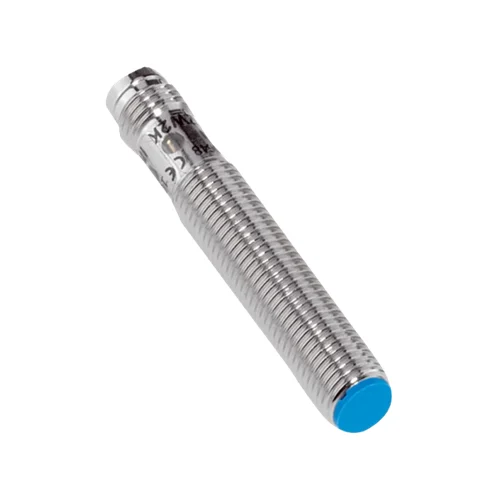
The SICK IME08-05NPSZT0SS01 Inductive Proximity Sensor is a compact, durable solution engineered for reliable detection of metal objects without physical contact. With a 5 mm sensing range and M8 × 1 threaded housing, it offers precise detection even in confined or high-density setups. Its PNP normally open output and nickel-plated brass construction provide both performance and resilience against harsh industrial conditions. Designed for automation tasks such as position sensing and object counting, this sensor ensures stable operation, quick installation, and long-term accuracy across varied production environments.
Engineered for consistent performance in demanding conditions, the SICK IME08-05NPSZT0SS01 delivers high-speed switching up to 4,000 Hz, making it suitable for fast-moving automation systems. Its non-flush installation allows a greater sensing distance and versatility across different metals, maintaining precision under vibration or temperature changes. Rated IP67, it performs reliably in dusty or moist areas. With short-circuit and startup protection, it enhances operational safety, while the standard M8 3-pin connector simplifies wiring. This sensor is ideal for assembly, packaging, and conveyor applications where compactness, repeatability, and robustness are essential.
Why SICK IME08-05NPSZT0SS01?
Because precision and durability meet in one compact body. The SICK IME08-05NPSZT0SS01 stands out for its fast response, solid construction, and reliable detection even in tight, demanding spaces. It’s engineered to simplify automation, delivering consistent sensing accuracy that keeps machines running smoothly with minimal downtime.
What problem does it solve?
It eliminates the guesswork and mechanical wear of physical contact sensing. The IME08-05NPSZT0SS01 solves detection challenges in confined or harsh environments by providing accurate, contactless metal sensing. It ensures precise part positioning, reduces maintenance, and enhances overall equipment reliability in high-speed automated systems.
Key Features & Specifications – SICK IME08-05NPSZT0SS01 : 1042961
| Feature | Details | Benefit |
|---|---|---|
| Sensing Range (Sn) | 5 mm | Provides accurate detection of metal objects at optimal distance. |
| Safe Sensing Range (Sa) | 4.05 mm | Guarantees stable detection performance and safety margin. |
| Installation Type | Non-flush mounting | Extends sensing distance and reduces interference from surrounding metals. |
| Thread Size / Housing | M8 × 1, Brass nickel-plated | Compact and durable body for industrial use. |
| Output Type | PNP, Normally Open (NO) | Compatible with modern PLCs and control systems. |
| Connection Type | M8, 3-pin connector | Simplifies wiring and ensures quick installation. |
| Switching Frequency | Up to 4,000 Hz | Enables precise detection in high-speed automation tasks. |
| Supply Voltage Range | 10–30 V DC | Flexible power input for various industrial systems. |
| Protection Features | Short-circuit, Power-up pulse protection | Ensures sensor reliability and system safety. |
| Enclosure Rating | IP67 | Dust-tight and water-resistant for harsh environments. |
| Operating Temperature | +5 °C to +80 °C | Performs consistently across a wide temperature range. |
| Material (Sensing Face) | Plastic (PA 66) | Resistant to impact and corrosion for long service life. |
| Housing Length | 50 mm | Compact design suitable for tight machine spaces. |
| Mechanical Strength | Shock resistance up to 30 g | Withstands vibration and mechanical stress in industrial setups. |
| Compliance & Certification | CE, UKCA, UL, China RoHS | Meets global quality and safety standards. |
| Typical Applications | Positioning, Counting, Metal detection | Ideal for assembly lines, conveyors, and packaging machines. |
Commercial Data – SICK IME08-05NPSZT0SS01 : 1042961
| Commercial Data | Details |
|---|---|
| EAN Code | 4047084259104 |
| Weight (Net) | 18 g |
| Country of Origin | Hungary |
The Applications
1. High-Speed Conveyor Part Counting
On automated conveyor systems where metallic parts move rapidly, the SICK IME08-05NPSZT0SS01 ensures every item is detected with precision. Its 4,000 Hz switching frequency handles fast motion without missing a count. The non-contact sensing prevents mechanical wear, while its IP67 housing resists oil, dust, and vibration. Installed above or beside the conveyor, it provides continuous and stable detection, helping production lines maintain accurate part counts and minimize costly stoppages caused by undetected or miscounted components.
2. Robotic Welding Station Position Check
In robotic welding environments, even a slight misplacement can result in poor weld quality or equipment damage. The IME08-05NPSZT0SS01 verifies that each metal part is properly positioned before the welding starts. Its nickel-plated brass body withstands sparks, heat, and vibration. The PNP output easily integrates with robotic control systems for instant feedback. This ensures precise weld positioning, reduces rework, and extends the lifespan of robotic fixtures by preventing collisions and incorrect operations.
3. Metal Stamping and Die Protection
In high-speed stamping presses, the sensor monitors whether metal sheets are correctly placed before the press closes. Its non-flush design provides an extended sensing range, detecting targets without direct contact. Even under strong vibration or repetitive motion, it maintains consistent performance. This quick response allows the control system to halt the press immediately if a sheet is misaligned or missing—avoiding die damage and costly downtime while ensuring continuous, safe production.
4. Automated Metal Sorting and Recycling Lines
In recycling facilities, the IME08-05NPSZT0SS01 detects metal pieces traveling on conveyor belts for automatic sorting. Its fast detection rate and rugged construction make it ideal for dusty, rough environments. Positioned near sorting chutes or diverters, it distinguishes metallic items with reliability. The maintenance-free operation keeps the process efficient, ensuring metals are separated quickly and accurately. This improves throughput, reduces manual labor, and enhances the overall automation efficiency of sorting systems.